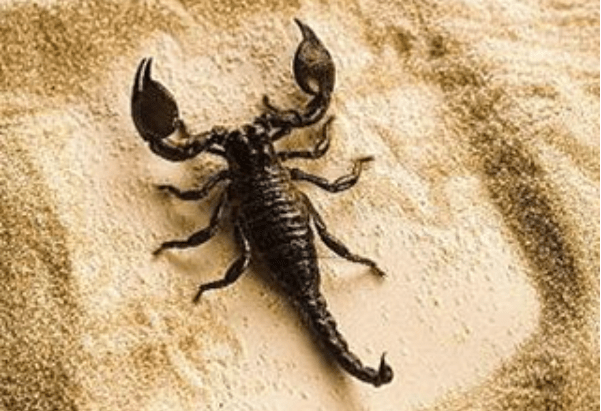
The Marabout draws a large circle in the dirt, which represents the world. He places a scorpion, symbolic of man, inside the circle.
The scorpion, believing it has achieved freedom, starts to run around the circle – but never attempts to go outside.
After the scorpion has raced several times around inside the edge of the circle. The Marabout lowers his stick and divides the circle in half. The scorpion stops for a few seconds, then begins to run faster and faster, apparently looking for a way out, but never finding it. Strangely enough, the scorpion does not dare cross over the line.
After a few minutes, the Marabout divides the half circle. The scorpion becomes frantic. Soon the Marabout makes a space no bigger than the scorpion’s body. This is “the moment of truth.” The scorpion, dazed and bewildered, finds itself unable to move one way or another.
Raising its venomous tail, the scorpion turns rapidly ‘round and ’round in a veritable frenzy. Whirling, whirling, whirling until all of its spirit and energy are spent. In utter hopelessness the scorpion stops, lowers the poisonous point of its tail, and stings itself to death.
It’s torment ended.
Category: Quotes / Wisdom
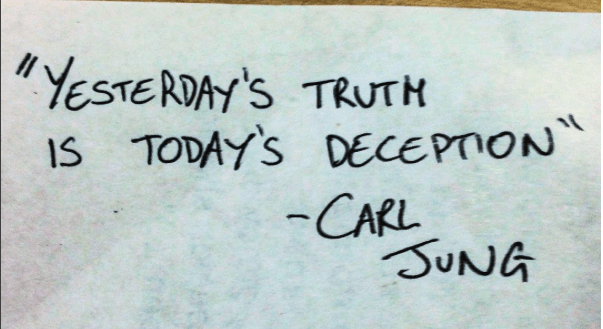
“…when I fall into the abyss, I go straight into it, head down and heels up, and I’m even pleased that I’m falling in just such a humiliating position, and for me I find it beautiful.”
– Dmitri Karamazov, from ‘The Brothers Karamazov’ by Fyodor Dostoyevsky
A Short Excerpt from Bruce Lee: Fighting Spirit; a Biography (The greatest book I’ve ever read on coaching)
“Knowledge and understanding are not the same thing. Knowledge is built on the experience of the past; understanding is built on the experience of the present. Anyone who simply identifies with Bruce Lee or a system called ‘Jeet Kune Do’ has become trapped. But to be inspired to experience and understand, for oneself, what Bruce Lee understood is what he intended.
Jesus Christ, another teacher whose insights have given way to various dogmatic and fundamentalist followings, expressed the same truth when he said: ‘Follow me and you will lose yourself; but follow yourself and you will find both yourself, and me.’ Organised dogmatic religion betrays its original visionary. Any any martial artist who clings to his teacher’s words denies his own possibility of understanding.”
The search for static answers will always produce dead ends.
-TF
“The only difference between me and a mad man is that I am not mad.” – Salvador Dali
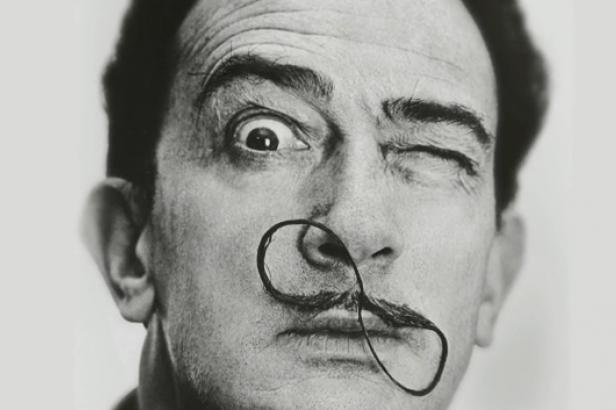
“To all the misfortunes to which we are heir, it is only fair to admit that we are allowed the greatest degree of freedom of thought. It is up to us not to misuse it.”
– André Breton
Notes from the I-Ching: Patience [Waiting] (#5)
“A fisherman casts a line, but can only wait for the fish to bite.
Your catch will come in it’s own good time; you cannot make it come sooner.
Only through patience can you become the bridge between the fickle fish & the eventual feast.
Periods of waiting are most fruitful when used for quiet contemplation.
Waiting is an essential skill; patience is a powerful force.
Time weakens even the hardest obstacles.”
The greatest thinkers didn’t give us answers.
They gave us better questions…
-TF
Various Thoughts from Einstein
 ”
”
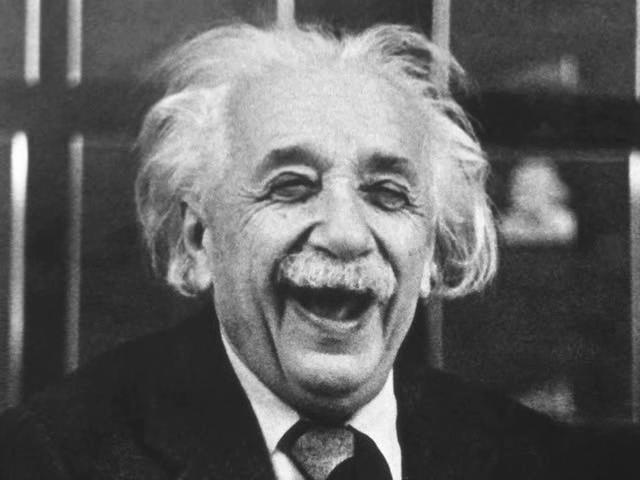
“We all dance to a mysterious tune, and the piper who plays this melody from an inscrutable distance – whatever name we give him – Creative Force or God – escapes all book knowledge.”
“Science is never finished because the human mind only uses a small portion of its capacity, and man’s exploration of his world is also limited.”
“Let us accept the world is a mystery. Nature is neither solely material nor entirely spiritual.”
“I believe I have cosmic religious feelings. I never could grasp how one could satisfy these feelings by praying to limited objects.”
“The world needs moral impulses which, I’m afraid, won’t come from the churches, heavily compromised as they have been throughout the centuries.”
“If we want to improve the world we cannot do it with scientific knowledge but with ideals. Confucius, Buddha, Jesus & Gandi have done more for humanity than science has done.”
“Religion & Science go together. As I’ve said before, science without religion is lame and religion without science is blind. They are interdependent and have a common goal – the search for truth.”
“Many people think that the progress of the human race is based one experiences of an empirical, critical nature, but I say that true knowledge is to be had only through a philosophy of deduction. For it is intuition that improves the world, not just following a trodden path of thought.”
“Intuition makes us look at unrelated facts, and then think about them until they can all be brought under one law. To look for related facts means holding onto what one has instead instead of searching for new facts.”
“Intuition is the father of new knowledge, while empiricism is nothing but an accumulation of old knowledge. Intuition, not intellect, is the ‘open sesame’ of yourself.”
“Indeed it is not intellect, but intuition which advances humanity. Intuition tells man his purpose in this life.”
 Some Words Left Behind