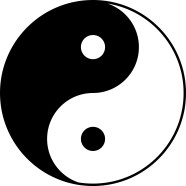
The dichotomy of chaos & order roughly corresponds to openness & conscientiousness in terms of personality traits – individuals higher in openness tend to be more comfortable in chaos, individuals higher in conscientiousness tend to be more comfortable in order; but we all need a balance of the two.
Individuals that score high in conscientiousness tend to prefer planned, rather than spontaneous behaviour. They display self-discipline, like to be prepared, pay attention to details and are more likely to follow a schedule.
Those who score high in openness are usually more intellectually curious, creative, aware of their feelings and willing to try new things. They are also more likely to hold unconventional beliefs.
So order & conscientiousness are roughly aligned to structure/stability, whereas chaos & openness are roughly aligned to update.
Most successful organisations will be biased towards order, so they are able to function effectively, but to continue at the top of their industry a certain amount of openness or update is required. How does an effective organisation effectively utilise chaos/update without it overwhelming their structure and conscientiousness?
This problem is also found in the political sphere – governments are challenged with needing to maintain a certain amount of order & stability while also needing to continually update and modernise society, so it is able to keep up with an ever changing world. It is clear that the structure/update dichotomy also roughly maps on to that of right wing/left wing thinking. Those who are paying attention will be noticing that too much of one or the other in any of these realms is not healthy.
The individual must always maintain a certain amount of structure in their life, while updating enough about themselves to keep boredom and stagnation at bay. While this is almost a universal truth, how individuals differ is in the amount of structure or update required in order for them to feel at peace with their situation.
The coach must essentially manage order and chaos when dealing with athletes; one example – how much of the athletes current abilities/skill set should they aim to leave in place, while they attempt to update their abilities/skill set? If order is when the athlete is feeling somewhat comfortable in their environment, and chaos is when they’re uncomfortable. What methods are available to the coach to manage the athlete’s exposure to these two realms?
The best athletes are those that best manage chaos & order within their sport’s competitive environment. When there’s chaos they can see and create order, when there’s too much order, they can break up the competition, make it more chaotic and exploit their opponents ability to find order there.
Ultimately the best athletes, or the best practitioners in any discipline, are those that are able to face chaos (or the unknown) and come back with something useful. Just like the knight faces the dragon and comes back with the treasure.
So the best coaches are those that best manage their athlete’s exposure to order & chaos. They’re able to recognise when their athletes need to be challenged with more chaos, as well as understanding what form that chaos should come in and how much of it there should be. They should also be able to recognise when their athlete is suffering from too much chaos, and be able to help them find their way back to an appropriate order. This applies to all elements of performance – technical, tactical, physical and psychological.
It should be understood that following order in search for answers can only get you so far; it can at best lead you to figuring out known unknowns. To assume we’re clever enough to know what the unknowns are in something as complex as sport, and even more so life, is naive. We need to ultimately be able to manage chaos and turn it into something useful. A foundation of order is helpful for this, as it means we’re more likely to be able to find our way back. But when you stare into the abyss, the abyss stares back into you – you won’t be the same after chaotic exposures. But if update is needed then this is exactly what you need. Enjoy the journey.

 Some Words Left Behind